Saturday, 14 March 2015

Review 2015 No. 9 | Miss Marple's Final Cases by Agatha Christie


  • Sanctuary
  • Strange Jest
  • Tape-Measure Murder
  • The Case of the Caretaker
  • The Case of the Perfect Maid
  • Miss Marple Tells a Story
  • The Dressmaker's Doll
  • In a Glass Darkly

Continuing with this year's theme, which is rapidly turning into a gameshow ("How Many Old Fictional Friends Can You Revisit In A Year"), this week I stuck with Christie but this time a Miss Marple. Originally only published in America in 1924, Miss Marple's Final Cases and Two Other Stories is a collection of six short stories set, as is the case in The Labours of Hercules (see link below), towards the end of the detectives career. Two short supernaturals tales are also included at the end, sans Marple, as if an afterthought. The collection was published in the US first and then (posthumously) in the UK in 1979, and it shows. This is not the pinnacle of her work.

Miss Marple is a character you fall in love with. She's the favourite great-aunt that you will always have a place in your heart for. However she is shamelessly ill-utilised in these short stories. As in The Labours, Christie doesn't have the space for character and plot building,  the kind for which she is celebrated in The Murder of Roger Ackroyd. The detective is used as a mere pawn, a plot device to tie up clues that would otherwise remain unresolved. In the two supernaturals Christie reveals herself scrabbling in the deep end, lacking the stylistic flair and practice to pull it off. In short, as a Miss Marple book this just doesn't cut it. But then it has quite some competition. The Final Cases are the lifetime's notes and unpublished papers of a serial wordsmith, the kind found lingering in the back of a writing desk. But why should that make it any less masterful?

Sunday, 8 March 2015

Review 2015 No. 8 | The Labours of Hercules by Agatha Christie


I have put off reading much of Agatha Christie's work for far too long. Her 66 detective novels and 14 short story collections have become an itch that I must scratch. Last week I decided to go on a Christie kick in order to discern once and for all what I think of her as a writer, what her detective fiction contributed at the time, and which, if any, are her masterpieces. The Labours of Hercules is Christie in her prime. She was into her third decade as a published writer when she published The Labours of Hercules in 1947. Her success led to one of her two plays, The Mousetrap, opening in the theatre five years later. Her career is mirrored in that of her egg-headed, pompous detective Hercule Poirot, who says he will take on twelve final cases before supposedly retiring in The Labours. 

The Labours are a feat of engineering. Christie designed the marathon short story collection so that Poirot's 'final twelve cases' would reflect the Greek mythical adventures of Hercules, they even share the same names. The effort is carried off with all the pluck and aplomb of a serial writer. She does for example demonstrate her intellectual prowess, sense of humour and wit in the first of the cases, when Poirot is involved in a discussion about his unique name, which is compared with that of Arthur Conan Doyle's fictional figure Sherlock Holmes. 

Short story collections create technical difficulties not seen in the average Joe novel. When Guy Andrews wrote the screenplay for the 2014 ITV adaptation five of the stories were merged into one, based around the dreamy Swiss Alps setting of the fourth story, The Erymanthian Boar. And that's just it. The stories are a sprint, an unrewarding attempt to do too much, too quickly, too soon. There is none of the character development, intricate weave of red-herring trails, motives and timely clues. That's not to say the reader should be deterred. It's Christie having fun, experimenting. It stands to reason that if you are a Christie fan then it's still worth the effort. For me it just doesn't work in the same way as her epic novel plots, seen in the likes of The Murder of Roger Ackroyd and And Then There Were None.

Wednesday, 4 March 2015

Spring Citrus Sponge | Lemon Cake Recipe


I'm a cake addict. Have been for as long as I can remember. Sometimes the mood takes you and nothing but a dangerously indulgent combination of sugar and fat, in the form of cake, will do. My favourite is usually the toxic 50:50 fat:sugar ratio found in cheesecake. For those who hanker for the citrus in moments of weakness, a light lemon sponge cake is the ticket. Why not try this sponge laced with lemon zest and topped with a sugar/lemon glaze.

Ingredients
4 large eggs, room temperature
8oz sifted flour
8oz caster sugar
8oz unsalted butter, room temperature
Zest of 2 lemons

For the butter icing/topping
Juice of 2 lemons
100g caster sugar
50g icing sugar
100g unsalted butter

Method
1) Preheat your oven to Gas Mark 4, 180oC or 160oC fan, and line 2 large round shallow cake tins with parchment paper.
2) Cream together the caster sugar and butter until combined and fluffy.
3) Beat the eggs together separately and add to the mixture gradually.
4) Fold in the flour and grated lemon zest until the mixture is fully combined.
5) Use a tablespoon to divide the mixture equally between the 2 cake tins and bake in the oven for 20-25 minutes.
6) When ready, take the cakes out of the oven and leave to cool on a wire rack.
7) Whilst still warm, spread a mix of half of the lemon juice and all of the sugar over the top half of the cake with a egg or pastry brush.
8) Make the butter icing by combining the other half of the lemon juice, the icing sugar (sifted) and the butter. (Be careful not to add too much lemon juice as it makes the icing runny!)
9) When both halves of the cake are cool assemble the cake by filling the middle with the butter icing and spreading any leftover lemon and sugar glaze over the top.


To see the Mary Berry Lemon drizzle cake recipe that inspired this post:

Thursday, 26 February 2015

Review 2015 No. 7 | The Lion, the Witch and the Wardrobe by C.S. Lewis

The Lion, the Witch and the Wardrobe, illustrated by Christian Birmingham; C.S. Lewis (1950); Collins 

"I can always get back if anything goes wrong," thought Lucy. She began to walk forward, crunch-crunch over the snow and through the wood toward the other light. In about ten minutes she reached it and found it was a lamp-post. As she stood looking at it, wondering why there was a lamp-post in the middle of a wood and wondering what to do next, she heard a pitter patter of feet coming toward her.
Lucy Looks into a Wardrobe; The Lion, the Witch and the Wardrobe; page 9

With these immortal words, Clive Staples Lewis (or C.S. Lewis as he's usually known) conjured up one of the most captivating and unique children's fantasy world's ever created. The Irish Oxford University don created the Narnia world, seen throughout the Chronicles of Narnia's seven high fantasy novels. The Lion, the Witch and the Wardrobe was published first in 1950 by Geoffrey Bles and masterfully illustrated by Pauline Baynes, whose illustrations are still used in many editions to this day.

The Lion, the Witch and the Wardrobe, illustrated by Pauline Baynes; Pocket Edition; HarperCollins

Although published first, the story actually comes second chronologically in the series, preceded by The Magician's Nephew, published in 1955. The series sprouted from post-war England and reflects Lewis' conversion to Christianity following the early death of his wife. The Lion is the Jupiter of Michael Wood's The Narnia Code. Wood claims that each of the seven stories represent a planet and that the second is the snowy, icy winter tale representing a pre-Christian world before Jesus Christ's sacrifice, his place taken here by Aslan the lion. Best-selling British writer Philip Pullman has cast Lewis as a Christian propagandist is the guise of a children's author, famously opposing Narnia's religious undertones in his fantasy trilogy His Dark Materials.

The second in the series is set in 1940 and tells the story of how the Pevensie's - Lucy, Susan, Peter and Edmund - originally discovered Narnia in a wardrobe of the old house that they were evacuated to. Along the way we meet Professor Digory Kirke (who we first see as a child in The Magician's Nephew), as well as the White Witch Jardis, Aslan the Lion, and forests of talking animals. 

As a child I was captivated by the idea of finding another world in a wardrobe. It's similar to the Alice Through the Looking-Glass fantasy of a parallel universe lurking behind the mirrors in your house. I think that is why this book instantly became my favourite ever children's story, and why I spent my childhood looking in the backs of wardrobes and watching the 1988 BBC adaptation again and again. It is a crossover novel and is utterly charming. Whatever your beliefs, this is a winter tale like no other.

Watch an interview with the actors who played the Pevensie children in the BBC series adaptation:

Sunday, 22 February 2015

Bookish Things Haul | Little Women Out Of Print


Out Of Print is a company that searches for unique and quirky out-of-print book cover designs to use on book-related clothes and accessories. This beautiful pencil case, with a cover design for an out-of-print copy of Little Women by Louisa May Alcott, is available, along with other Out Of Print products, from Waterstones. 


Visit the website to find out more: http://www.outofprintclothing.com

Friday, 20 February 2015

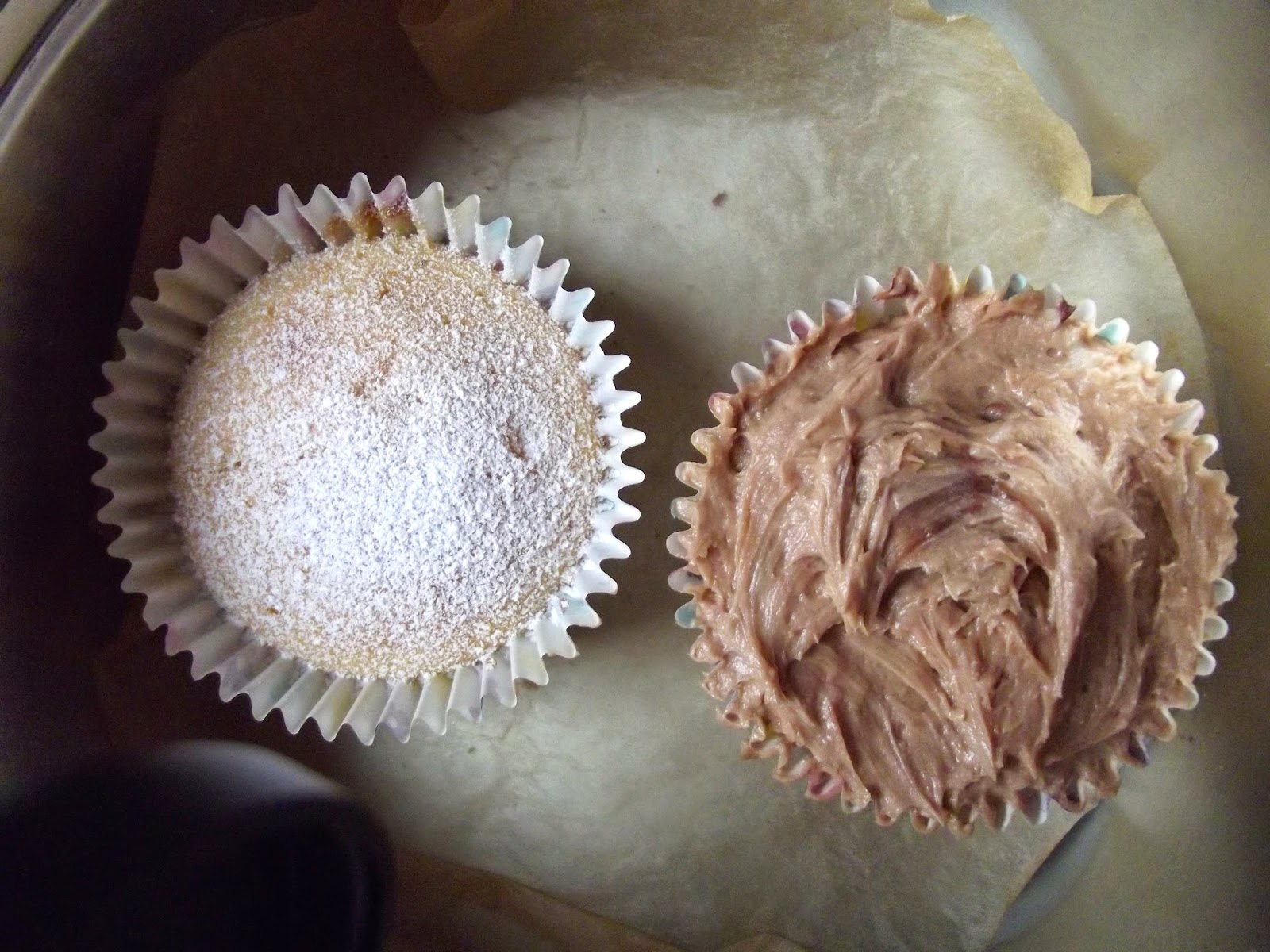
'Mr Nutella' Chocolate Cupcakes | Weekend Bake Recipe


In honour of Ferrero Rocher chocolate tycoon Michele Ferrero, or 'Mr Nutella', who sadly died this week, I had fun developing these Nutella inspired treats. Warning: These cupcakes contain a combination of ingredients so indulgently sweet as to probably be capable of inducing a heart attack. Bon Appetit!


Ingredients (Makes 6):
2 eggs (room temperature)
2oz caster sugar
2oz self-raising flour, no need to sift (or plain flour and 1 teaspoon baking powder) 
2oz unsalted butter (room temperature)
1 teaspoon vanilla extract

Butter icing: icing sugar, unsalted butter, vanilla extract, 1 dessert spoon of Nutella

Method:
1) Preheat oven to Gas Mark 5
2) Cream together sugar and butter
3) Mix in eggs and vanilla extract
4) Fold the flour into the mixture
5) Spoon half of the mixture into 6 muffin cases
6) Add a teaspoon of Nutella in the middle of each case
7) Spoon the rest of the mixture into the cases, so that it covers the Nutella blob in the middle
8) Bake for 15-20 minutes in the preheated oven and allow to cool on a wire rack when baked
9) Decorate with a sprinkle of icing sugar or a dollop of Nutella butter icing